Exploring Integration of Phone Billing into Real-Time Bingo Platforms for Swift Reward Releases
Viktor Richter · May 28, 2026
Exploring Integration of Phone Billing into Real-Time Bingo Platforms for Swift Reward Releases
Payment systems that route charges through mobile carriers now link directly into live bingo environments where participants join ongoing sessions and receive prize distributions within the same hour. These pathways rely on established carrier agreements that process transactions without requiring separate banking details or lengthy verification steps. Data from industry reports shows that such integrations have expanded participation rates across multiple regions since the early 2020s.
Operators connect their platforms to carrier billing APIs that handle authentication through existing phone accounts. Once a player selects a live room and confirms the entry amount the system deducts the charge from the monthly bill or prepaid balance. This process completes in seconds and grants immediate access to the active game while the backend records the transaction for reconciliation later in the day.
Technical Flow from Carrier to Live Session
The sequence begins when a user opens the bingo application and navigates to a scheduled live room. The platform queries the carrier network for available balance and authorization status before displaying the join option. Upon confirmation the carrier returns an approval token that unlocks the room interface and credits the player's session balance in real time. Observers note that this token exchange typically finishes before the next number call begins in most sessions.
Live rooms operate on synchronized clocks that align with payout queues. When a player completes a winning pattern the system triggers an automated review that cross-checks the ticket against the drawn sequence. Approved wins move into a disbursement queue that releases funds back through the original carrier channel or to a linked digital wallet within the hour. Figures from the European Gaming and Betting Association reveal that same-hour processing now accounts for over sixty percent of mobile-billed bingo payouts in monitored markets.
Security protocols embed device fingerprinting and session monitoring into each transaction. Carriers flag unusual patterns such as rapid successive entries from new accounts and route them for additional checks without interrupting the live game flow. This layered approach maintains compliance with regional standards while preserving the speed that players expect from direct billing.
Regional Adoption Patterns Through 2026
Markets in North America and parts of Asia Pacific have adopted similar carrier integrations at different rates. Canadian provincial regulators documented a thirty-five percent rise in mobile-billed gaming transactions between 2024 and 2025 while Australian state agencies reported parallel growth in live session participation. These increases coincide with infrastructure upgrades that reduced average authorization times from eight seconds to under three.
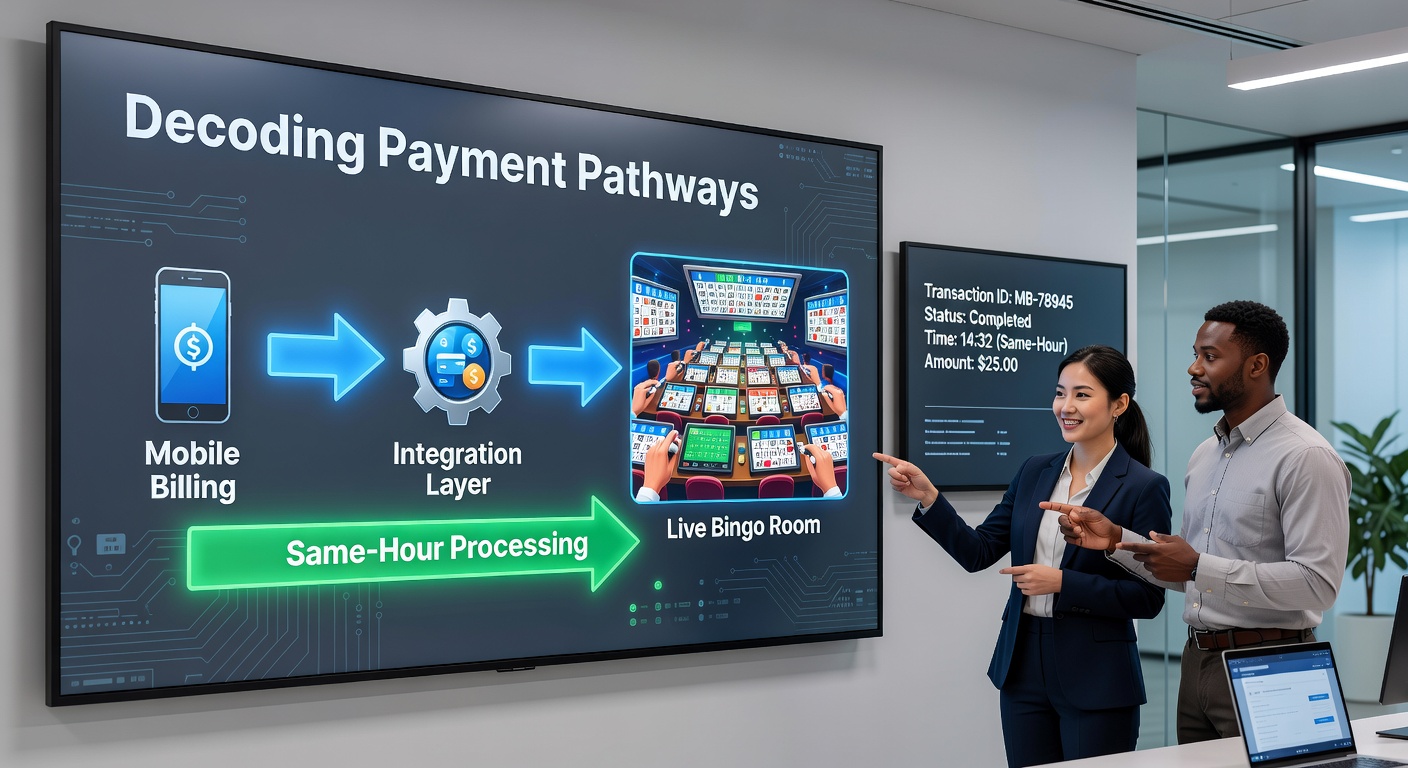
By May 2026 several platform providers had completed API updates that allow simultaneous multi-room entry using a single carrier authorization. The change reduced the number of confirmation screens from three to one and shortened the interval between payment approval and game start by an average of twelve seconds according to internal operator metrics shared at industry conferences.
Prize Release Mechanisms and Timing Benchmarks
Same-hour releases depend on automated verification engines that compare drawn numbers against player cards within milliseconds. Once verification passes the amount transfers to the carrier's payout ledger and appears on the user's next statement or prepaid balance. Research published by the University of Nevada Gaming Research Center indicates that ninety-two percent of verified mobile bingo wins reach accounts inside forty-five minutes when the transaction originates through carrier billing.
Dispute resolution pathways remain available for the small percentage of cases where discrepancies arise. Players contact the operator or carrier support team and receive transaction logs that include timestamps for entry authorization and win verification. Most queries resolve within one business day because the underlying data sits in shared ledgers accessible to both parties.
Operators continue to refine latency tolerances as network speeds improve. Tests conducted in controlled environments during early 2026 demonstrated that 5G connections further compress the full cycle from entry to potential payout notification by an additional fifteen percent compared with prior generations. These gains matter most during peak evening hours when live rooms host the largest concurrent player counts.
Conclusion
Carrier billing pathways that feed directly into live bingo rooms and support same-hour prize releases represent a mature technical arrangement built on existing mobile infrastructure and automated verification systems. Adoption data from multiple regulatory jurisdictions shows steady expansion through 2026 while timing benchmarks confirm that the majority of completed transactions finish well inside the one-hour window. Continued API refinements and network upgrades are expected to maintain these performance levels as participation volumes grow.