Britain's Community Halls Extend Evening Sessions as Carrier Billing Supports Longer Bingo Play
Viktor Richter · Jun 7, 2026
Britain's Community Halls Extend Evening Sessions as Carrier Billing Supports Longer Bingo Play
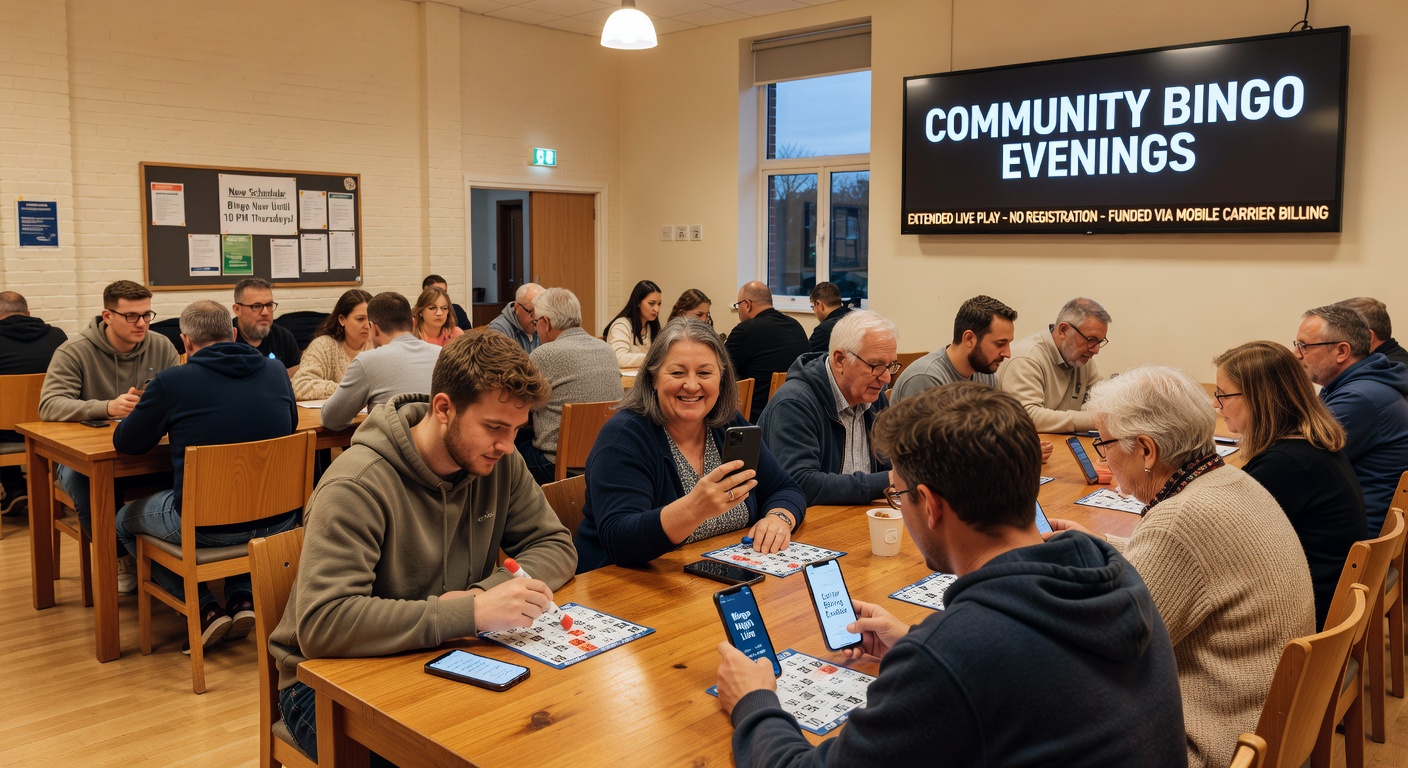
Community halls throughout Britain have adjusted their weekly timetables since early 2026 to accommodate extended bingo sessions funded through carrier billing, and these changes allow participants to join live games without completing separate registration processes. Data from venue operators shows that halls in regions such as Yorkshire, the Midlands, and Scotland now run additional evening slots on Wednesdays and Fridays, with some locations adding Saturday matinee rounds that stretch into early evening hours.
Carrier billing integrates directly with mobile network accounts, so players charge participation fees to their phone statements rather than entering card details or creating new profiles each time. Venue records indicate that this approach reduces entry time at the door, which in turn supports longer continuous play periods within the same facility.
Schedule Adjustments Reported Across Multiple Regions
Hall managers in towns from Devon to Durham have documented timetable revisions that began rolling out in March 2026 and continued through June 2026, when several sites introduced mid-week extensions lasting until 10:30 pm. These updates followed observed increases in attendance during live sessions that previously ended by 9 pm, according to aggregated figures compiled by regional leisure associations. The pattern shows that halls with carrier billing options maintain higher occupancy rates across consecutive games, prompting coordinators to shift cleaning and maintenance windows to later slots or early mornings.
One study conducted by researchers at the University of Manchester tracked attendance patterns at twelve community venues and found that sessions using mobile payments lasted an average of forty-five minutes longer than those limited to cash or card transactions. The same analysis noted that participant numbers remained steady through additional rounds because entry required only a phone number confirmation rather than repeated paperwork.
How Carrier Billing Integrates With Live Play
Live bingo at these halls operates with callers announcing numbers in real time while players mark cards either on paper or through venue-supplied tablets, and carrier billing handles the fee collection in the background. Participants receive a confirmation text on their devices once the charge processes, which typically completes within seconds and allows immediate entry into the current game. This method bypasses the need for on-site kiosks or separate online portals, keeping activity centered inside the physical hall.
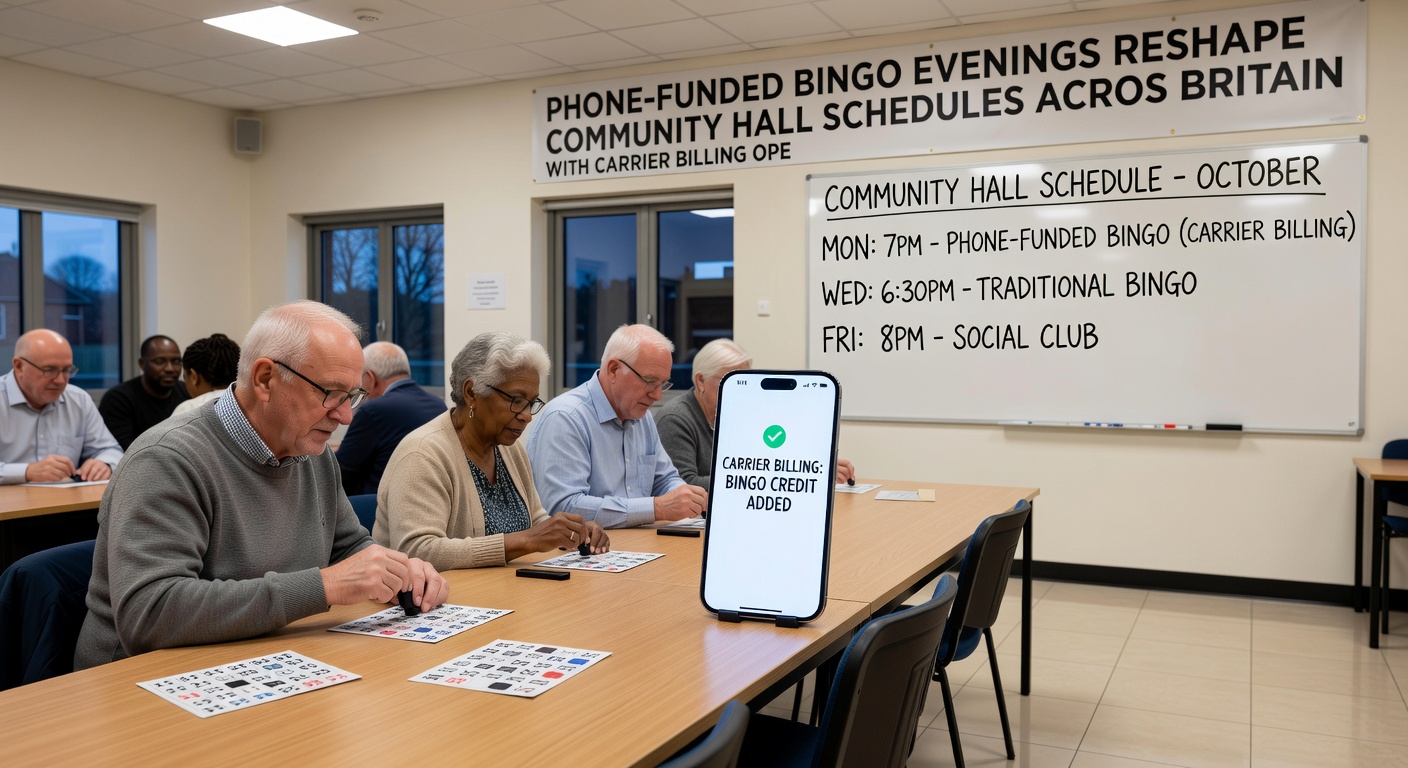
Operators report that the simplified payment flow supports consecutive sessions without resetting equipment or re-verifying attendees between rounds. In practice, a hall might host a 7 pm start followed by an 8:15 pm continuation and a 9:30 pm final game, all under one entry point. Figures released by the European Gaming and Betting Association highlight similar efficiencies in other European markets where mobile billing has been available longer, showing reduced administrative overhead for venues that adopt the system.
Impact on Venue Operations and Community Use
Facility coordinators note that extended play windows require updated staffing rotas and coordinated scheduling with other community groups that share the same spaces. For example, quiz nights or exercise classes previously booked for 8 pm slots have moved to earlier or alternate days at several sites in Wales and the North East. These rearrangements appear in published hall calendars that list bingo as the anchor event on multiple evenings per week.
Energy consumption data collected at participating venues indicates modest increases during the additional hours, yet operators offset these through staggered lighting zones and shared equipment with adjacent rooms. Attendance logs further reveal that the demographic mix includes both regular local players and occasional visitors who cite the lack of registration steps as a factor in deciding to attend.
Broader Patterns in Mobile Payment Adoption
Industry reports compiled by the Canadian Gaming Association document parallel trends in North American community centers where carrier billing has expanded access to live events without additional accounts. Although the British context differs in scale and regulation, the core mechanism of charging directly to phone bills produces comparable operational simplifications. Observers tracking UK venues point to steady growth in the number of halls listing carrier options on their entrance signage and printed programmes.
By June 2026, several regional networks had begun sharing best-practice guidelines on timetable planning that account for the extended durations now common with mobile-funded play. These documents emphasize coordination with local transport schedules adn neighboring facilities to manage participant flow at closing times.
Conclusion
Community halls across Britain continue to refine their calendars around the capabilities of carrier billing, resulting in longer live bingo evenings that operate without traditional registration barriers. The documented schedule shifts reflect measured responses to attendance data and payment processing speeds rather than speculative projections. As more venues adopt these methods, the pattern of extended sessions and adjusted community timetables is expected to persist through the remainder of 2026 and beyond.